Skip to content

recovery

Artwork for Circular Economy Podcast episode 183

183 Sean Petterson of Supersede: recycled plastic structural board that outperforms wood

Sean Petterson explains how Supersede delivers a true 1:1 replacement for plywood and OSB that outperforms wood on durability, safety, cost stability, and supply predictability, without the need for manufacturers to change how they build.
Sean Petterson is Supersede’s Co-Founder and CEO, and after beginning his career in construction, Sean has developed and secured multiple patents in manufacturing systems, material science, and applied technologies, with a focus on scalable production and real-world deployment. His experience spans polymer engineering, high-volume manufacturing, and commercialization of hardware and software systems.
Supersede is an advanced materials company transforming how structural building products are designed, manufactured, and deployed across marine, RV, specialty vehicles, and construction.
Supersede’s products are made from extruded industrial plastic waste, reducing supply chain risk, avoiding import tariffs and providing consistent pricing and reliable availability. Currently, Supersede is focusing on the boatbuilding, recreational and specialty vehicle markets, with additional verticals–including housing construction–coming soon.
Sean explains how Supersede’s combination of durability, circularity, and operational efficiency makes sustainability economically compelling for its clients – it solves multiple problems and improves on the existing alternatives for performance and price.
We’ll hear about some of Supersede’s many innovations, including micro-plant production units and its offcut buy-back programme, and how its local approach appeals to employees, clients and feedstock providers.
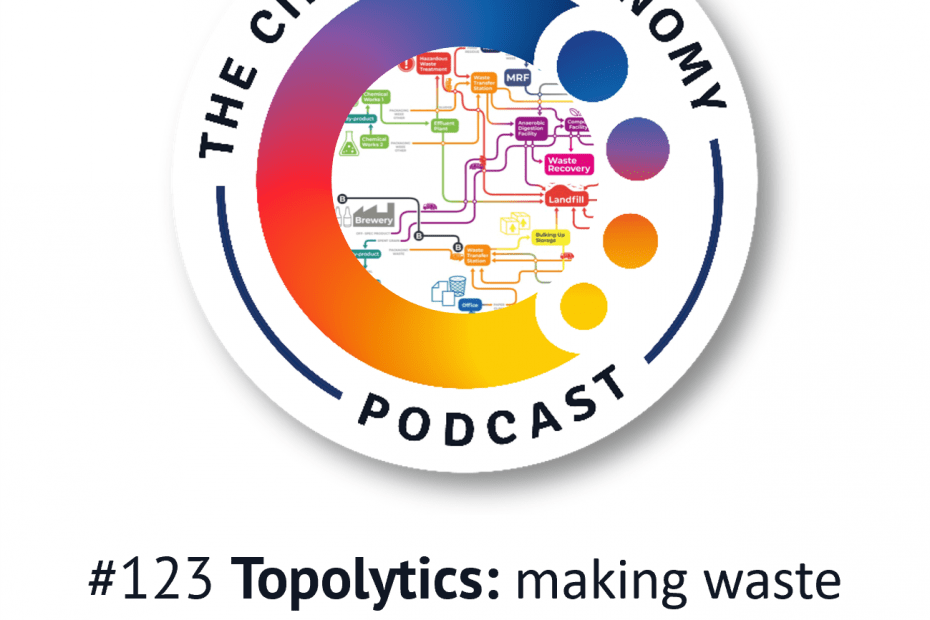
Circular Economy Podcast - artwork for Ep123 - Topolytics

123 Topolytics: making waste visible, verifiable and valuable

We explore why it’s important for business to map, and understand their waste flows: what it is, specifically; where it comes from and goes to; how much there is – and why!; and to understand the opportunities for wasting less and circulating more value.
Topolytics is a data analytics business that is making the world’s waste visible, verifiable and valuable.
Michael Groves and Fleur Ruckley explain how data analytics, mapping and machine learning can make waste and resource management more transparent, efficient and effective, both commercially and environmentally.
Founder and CEO Michael Groves is a geographer with a PhD in aerial and satellite earth observation. Michael has over 20 years’ experience in environmental management and sustainability reporting.
Fleur Ruckley is Topolytics’ Head of Implementation, using Topolytics’ WasteMap® platform to generate actionable waste and resources analytics for clients and their supply chains.
Fleur has a degree in Natural Sciences and a Masters in Environmental Management, and has worked in the charity, public and private sector supporting organisations, communities and schools to develop and implement sustainable and circular policies and practices. Fleur is a Chartered Waste Manager and is a member of the Circular Economy Steering Group for the Institute for Environmental Management & Assessment.
Leveraging Topolytics waste map means companies can identify areas for improvement, such as preventing or reducing the waste or by re-designing processes and products, to support reuse and to achieve more efficient and sustainable outcomes.
Mike explains how those sectors with significant waste generation are showing increasing interest in this. Business that understand what materials they produce and consume, can then make better decisions about recovery, reuse and recycling, and Geospatial analysis can help reduce waste by identifying material flow and leakage.
Fleur tells us how companies are starting to see the benefits of using data and modeling to reduce waste in their supply chains, with improvements in ESG reporting, supplier management, and overall performance.
Mike also highlights the potential for industrial symbiosis, using unwanted materials to create resources for another organisation – in other words, new by-products and value opportunities!

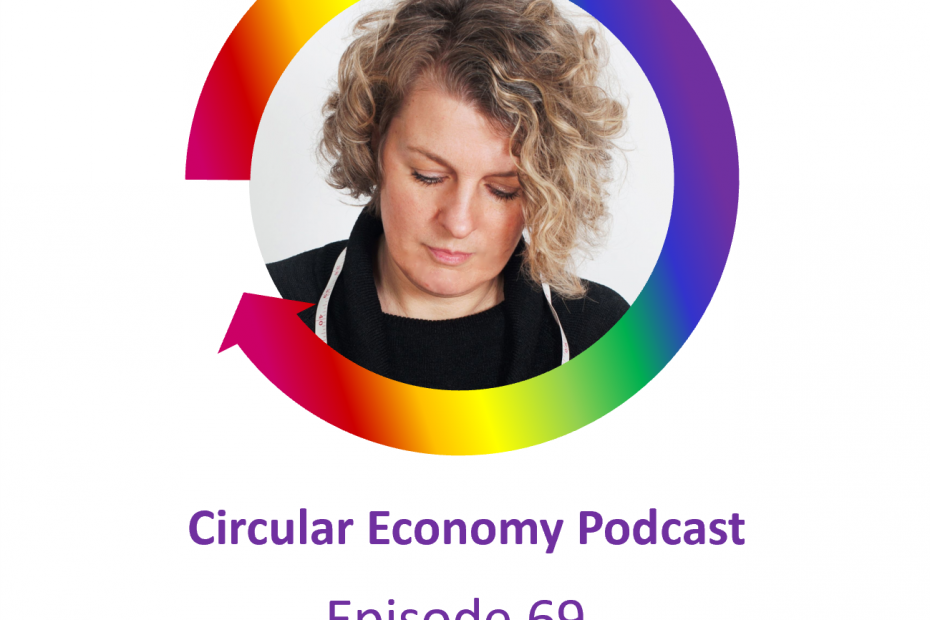
Circular Economy Podcast Episode 69 Jo Godden of RubyMoon - circular fibres for activewear

Episode 69 Jo Godden of RubyMoon – circular fibres for activewear

RubyMoon, based in Brighton in the UK, is already using recycled fibres from Ocean Plastics to make its active wear products, and now wants to go further through research projects that overcome the technical challenges of recovering and recycling the kind of textiles commonly used in swimwear.
Jo explains that this project focuses on two key fabric elements, Nylon 6 – a strong, durable polyamide, and Elastane, that makes the fabric stretchy so it fits well and supports activites like swimming and other sports.
The challenge is how to find mechanical and chemical methods of breaking down polyamide elastane, that are both cost-effective and environmentally sound.
There’s a second ambitious project too, developing a nano trace to embed into the material so that it can be identified and recovered, to make sure it goes back into the closed loop system.

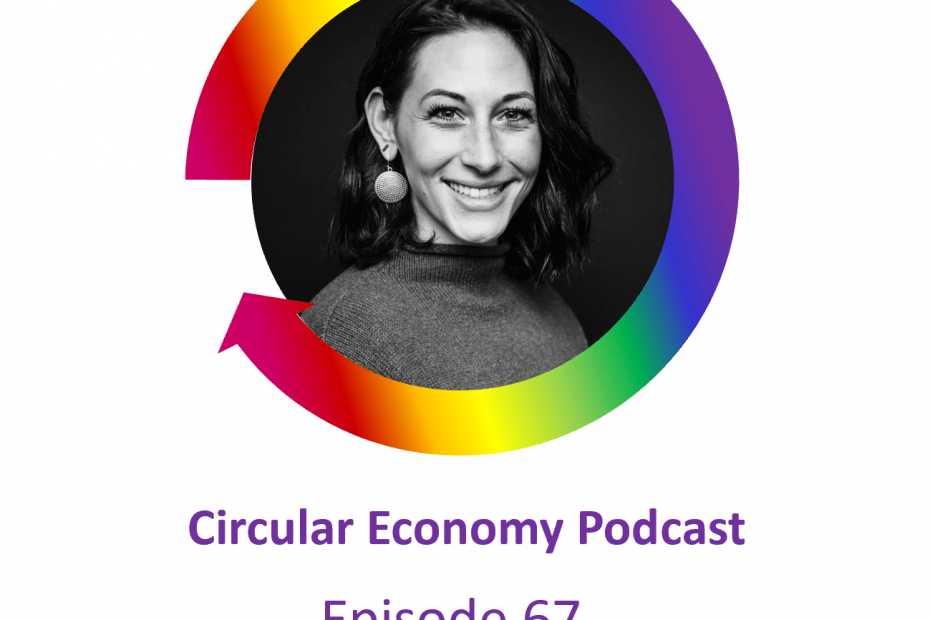
Circular Economy Podcast Episode 67 Megan O'Connor Of Nth Cycle

Episode 67 Megan O’Connor Of Nth Cycle – a big leap forward for metal & mineral recovery

Megan O’Connor is co-founder and CEO of Nth Cycle, a metal processing company that has developed technology to enable a clean, domestic, and streamlined supply of critical minerals for the clean energy transition.
Megan tells us how she came up with the idea for using electro-extraction, a technology developed by her co-founder for a completely different application, and how she then pivoted the entire focus of her PhD to develop this.

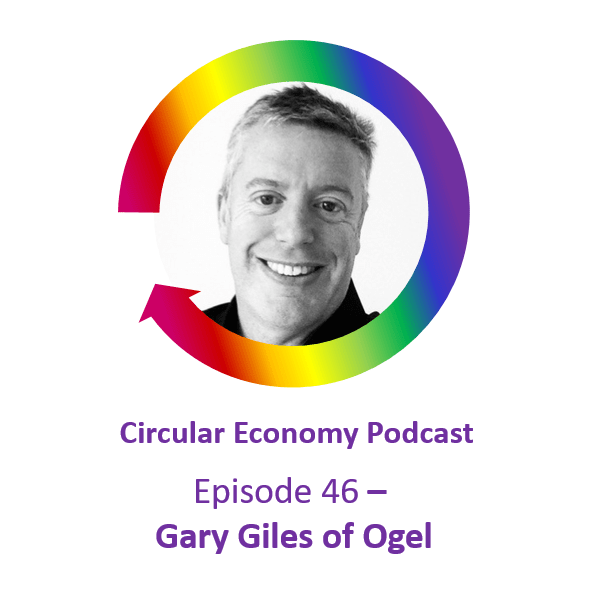
Circular Economy Podcast Episode 46 Gary Giles - OGEL

Episode 46 Gary Giles – OGEL

Gary Giles is another entrepreneur inspired by the circular economy. Gary set up his company, OGEL, to use a material that is quite difficult to recycle and very bulky, so transporting it to be recycled is expensive. We’ll hear how Gary was inspired by the modular design of Lego, and how he’s developed a way of constructing durable buildings that use only 3 shapes, are easy to assemble and need very few tools. Plus Gary tells us what a ‘full stop product’ is!

Circular Economy Podcast Episode 39 – Rob Thompson of Odyssey Innovation

Episode 39 – Rob Thompson of Odyssey Innovation

Rob Thompson, of Odyssey Innovation in the UK, is an Multi-award winning Innovator, a Marine Conservationist, and a Social Entrepreneur. Rob started Odyssey Innovation to find a way to create value out of beach litter and marine plastics, and is now recycling those plastics into kayaks and other useful products. Rob also supports the Paddle for Plastic campaign.

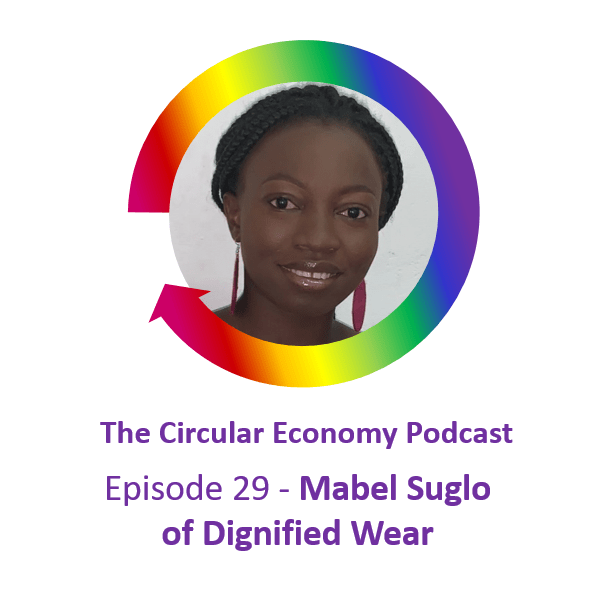
Circular Economy Podcast Episode 29 - Mabel Suglo of Dignified Wear

Episode 29 – Mabel Suglo of Dignified Wear

In this episode, we’re talking to Mabel Suglo, the founder of Dignified Wear, a social enterprise in Ghana. It aims to economically empower people with disabilities and rural women through decent jobs. It trains and then employs them to handcraft durable, versatile and fashionable shoes, handbags, locally woven fabrics, clothing and traditional jewellery.

Circular Economy Podcast Episode 28 Chris Diplock - The Thingery

Episode 28 Chris Diplock – The Thingery

Chris Diplock is the Founder and CEO of The Thingery, the parent organization of neighbourhood Thingery branches, and a leader in Vancouver’s collaborative economy. You could describe the Thingery as a ‘library in a box’ – the box being a shipping container! The containers are solar-powered and so can be sited in disused spaces near the communities that will use them. Technology allows people to access the container and then use the built-in systems to easily log what they are borrowing or returning. That means it is less reliant on volunteers, and can be open 24/7 if needed. Chris wants to make it easy for any community, worldwide, to set up their own Library of Things. We hear about the concept, the funding model, and the practicalities.

Circular Economy Podcast Episode 27 - Chris Hellawell Edinburgh Tool Library

Episode 27 Chris Hellawell – Edinburgh Tool Library

Chris Hellawell is founder and director of Edinburgh Tool Library, which works like a lending library, sharing tools rather than books.
Chris is passionate about the concept of sharing as a way to tackle the climate crisis, and also as a way to save money, and to build social connections in communities. By sharing, everyone is richer.
The Edinburgh Tool Library started out as a set of shelves in a spare room. Now it’s a city-wide organisation with multiple sites, including a tool maintenance depot, two wood workshops, a library and a police box. The Library runs classes, youth programming, skills development for disadvantaged groups, and a volunteer programme transforming community spaces throughout the city.

Rethink loop

Get in touch to arrange a call