Catherine Weetman is in conversation with Jo Chidley, a circular economy expert, chemist, herbal botanist, and co-founder of TWO successful circular economy businesses, Beauty Kitchen (which is on a mission to create the most effective, natural and sustainable beauty products in the world) and the business we’re focusing on today, ReRe* (*since rebranded as Reposit). Reposit is a buy anywhere, return anywhere, reuse anywhere alternative to single-use packaging, helping retailers, brands and consumers to switch to Reuse & Refills across a wide range of products from milk to moisturisers and pasta to protein.
Widely regarded as one of the pioneers of sustainable beauty since founding Beauty Kitchen back in 2014, Jo Chidley has been instrumental in developing the world’s first closed-loop solution for beauty packaging and has powered the service behind the ground-breaking Re programme & Refill Stations. Thanks to her leadership, Beauty Kitchen is recognised on the UK’s 50 Most Disruptive Companies list and has won numerous industry awards.
Jo is now championing a Reuse Revolution through Reposit – which is the new brand name for Return-Refill-Repeat and ReRe. Jo talks us through the many barriers – or excuses – that are blocking progress towards reusable packaging, and highlights some of the benefits including customer engagement and carbon reduction. You’ll probably be shocked by the proportion of GHG emissions created by the packaging of everyday products.
Jo explains the transformational potential of reusable packaging, and explains how Reposit is changing the brief for packaging designers – beyond the usual questions: can you make it cheaper, can you make it lighter and so on.
Jo tells us about the importance of turning competitors into collaborators, and why the system – the infrastructure – is the most difficult part of scaling out reusable packaging. We talk about how to make it convenient, and attractive, for people to return the packaging for another cycle of use.
To explain an acronym Jo uses – DRS – that means Deposit Return Schemes, which are regulations that say retailers have to provide take-back options for certain products or packaging, with customers paying a deposit when they buy the original product, and getting that deposit back when they return the item. For example, Scotland is introducing a deposit return scheme, so when you buy a drink in a single-use container you will pay a 20p deposit, which you get back when you return your empty bottle or can. That scheme goes live in August 2023.
Early on, Jo mentions a figure for the plastic packaging produced by the FMCG (Fast Moving Consumer Goods) sector each year. I wanted to give you a link to that statistic, but in looking for it, I discovered several different numbers for plastic packaging production, all from reputable sources. The figures range from 141 million tonnes to 171 million tonnes a year, across all industries. I’ll include links to those reports in the shownotes.
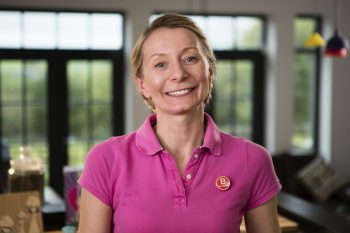 Jo Chidley is a circular economy expert, chemist, herbal botanist, and co-founder of Beauty Kitchen, the highest scoring B Corp in the UK beauty industry. Founded in 2014, Jo has set out to change the face of the beauty industry by creating the most effective, natural, and sustainable beauty products in the world.