Skip to content

Episode 19 – Åsa Stenmarck of IVL on how to create circular behaviour

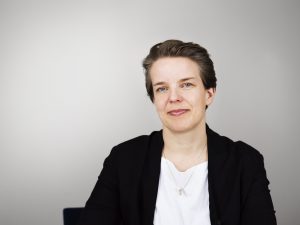
Circular Economy Podcast Episode 19 Asa Stenmarck of IVLCatherine Weetman talks to Åsa Stenmarck, of IVL, the Swedish Environmental Research Institute. Åsa works on projects that aim to create more sustainable consumption (including reducing consumption overall, sharing, waste minimization, recycling and so on), and she is particularly interested in plastics and food. We talk about return systems for food containers, food waste, behaviour change, ‘weasel words’, and how people expect both governments and companies to make ‘good choices’ easy for us.

Podcast host Catherine Weetman is a circular economy business advisor, workshop facilitator, speaker and writer.  Her award-winning book, includes lots of practical examples and tips on getting started.  Catherine founded Rethink Global in 2013, to help businesses use circular, sustainable approaches to build a better business (and a better world).

Stay in touch for free insights and updates…

Read on for a summary of the podcast and links to the people, organisations and other resources we mention.

You can subscribe to the podcast series on iTunes, Google Podcasts, PlayerFM, Spotify, TuneIn, or search for “circular economy” in your favourite podcast app.  Stay in touch to get free insights and updates, direct to your inbox…

About Åsa Stenmarck

In my work, I focus on developing and deliver projects that have the aim to create a more sustainable consumption (reduction of consumption, sharing, waste minimization, recycling etc.). In relation to that, I also work with plastics (the entire value chain, plastics vs other materials, recycling, recycling etc.) and with food (reduction of food waste, mapping of flows et). Over the years I have worked with many other product/waste types and I know a lot about Swedish and international product and waste legislation, instruments etc. I am a frequently asked expert and speaker in the area and one of my true joys is when I can bring research into reality.

IVL Swedish Environmental Research Institute has a wide environmental profile. We combine applied research and development with close collaboration between industry and the public sphere. Our consultancy is evidence-based, and our research is characterized by interdisciplinary science and system thinking.

IVL was jointly founded in 1966 by the Swedish state and national business interests to carry out research on industrial air and water issues. Today we are an environmental agency concentrating on much more. Common to all of our assignments is the interaction between ecological, economic and social perspectives.

What we talk about

[00:00]  Åsa gives us a bit of background to IVL, the Swedish Environmental Research Institute, and the work it does on resources, waste and the circular economy

Return systems for takeaway food containers

[04:23] Next Åsa tells us about a current project, looking at a return system for takeaway boxes. The project explores how to make it work for the businesses and for consumers, and includes food cartons and takeaway cups.

Reducing food waste

[15:41] A second project focuses on reducing food waste, which is helped by the increasing levels of environmental awareness in Sweden.

[20:05] We discuss some of the factors causing food waste, in particular the role of the tight specifications for fresh fruit and vegetables used in some retailers’ contracts with farmers and processors.  Catherine mentions some of the work that Feedback Global is doing in the UK [Podcast Episode 9] https://www.rethinkglobal.info/episode-9-lucy-antal-transforming-our-food-systems/

Behaviour change

[23:30] Catherine asks about the key behaviour changes, from the company buying team’s perspective, and the consumer’s perspective. Åsa says that giving people the ‘catastrophic’ statistics isn’t effective eg ‘3 million tonnes of apples/pears are wasted every year’. People tend to think they don’t waste very much, so they aren’t the ones causing the problem. Instead, telling people that their neighbour doesn’t waste food is more likely to persuade people to change.  Catherine mentions ‘nudge’ theory, and Robert Cialdini (author of many books on the psychology of persuasion and behaviour change).

Confusing terminology

[28:10] We move on to discuss packaging, including the issues and misinformation on biobased and biodegradable packaging.  This leads us into a discussion about ‘weasel words’ like natural.

[36:10] Åsa mentions an EU Commision report highlighting that citizens are expecting governments to do more to make companies responsible for doing the right thing for the environment.  Citizens expect businesses to make the right decisions on our behalf, not to present us with options that are bad for the environment (or for us).

[40:55] We wrap up and ask Åsa where we can find out more about her work

To find out more about the circular economy, listen to Episode 1, read our guide: What is the Circular Economy or buy the book: A Circular Economy Handbook for Business and Supply Chains

Why not sign up for the latest episode and insights, straight to your inbox?

Want to find out more about the circular economy?

If you’d like to learn more about the circular economy and how it could help your business, why not listen to Episode 1, or read our guide: What is the Circular Economy

To go deeper, you could buy Catherine’s book, A Circular Economy Handbook for Business and Supply Chains This comprehensive guide uses a bottom-up, practical approach.  It includes lots of real examples from around the world, to help you really ‘get’ the circular economy.  Even better, you’ll be inspired with ideas to make your own business more competitive, resilient and sustainable. 

Please let us know what you think of the podcast – and we’d love it if you could leave us a review on iTunes, or wherever you find your podcasts.  Or send us a Tweet: @Rethink _Global.

Podcast music

Thanks to Belinda O’Hooley and Heidi Tidow, otherwise known as the brilliant, inventive and generous folk duo, O’Hooley & Tidow for allowing me to use the instrumentals from the live version of Summat’s Brewin’ as music for the podcast. You can find the whole track (inspired by the Copper Family song “Oh Good Ale”) on their album, also called Summat’s Brewin’.  Or, follow them on Twitter.

172 Tom Llewellyn – Shareable part 2

172 (Part 2) Tom Llewellyn of Shareable: how sharing and cooperative projects help us thrive

This is the 2nd part of my conversation with Tom Llewellyn of Shareable, an organization that collaborates with others to imagine, resource, network, and scale cooperative projects. • We hear about Shareable's How-To Guides, which cover a vast range of topics from how to reduce food waste to starting mutual aid funds, and Tom explains how sharing initiatives are starting…
172 Tom Llewellyn – Shareable part1

172 Tom Llewellyn of Shareable: how sharing and cooperative projects help us thrive

We discuss the importance of sharing and its many benefits with Tom Llewellyn, the Executive Director of Shareable, which collaborates with others to imagine, resource, network, and scale cooperative projects. Tom helps communities develop Libraries of Things (LoTs) and other forms of low-cost, environmentally friendly social infrastructure that help people meet their material needs. Tom’s current work includes expanding these…
171 Dr Patrick Schroder Chatham House

171 Dr. Patrick Schröder: circular economy policymaking – progress and barriers

Dr. Patrick Schröder, a senior research fellow at Chatham House, assesses the progress and barriers for circular economy policymaking. Patrick Schröder specializes in the circular economy, climate change, resource governance, and the Sustainable Development Goals (SDGs). His work brings together science, policy, and media to help further evidence-based policies, communicate complex sustainability issues, and promote equitable governance solutions at the…
Ep169 Bailey Bestul Reuse of Architectural Components

169 Bailey Bestul: imaginative reuse of architectural components to create exciting and inspiring buildings

Bailey Bestul explains how imaginative reuse of architectural components can create exciting, unique and inspiring buildings. Bailey is a registered architect, researcher and author based in New York City. His book, Reuse of Architectural Components, published by Routledge, was inspired by Bailey’s extensive research throughout Europe after he was awarded a Fulbright grant by the Netherland-America Foundation. We discuss how…

Leave a Reply